
Sump Pump Installations in Lancaster, PA
DMR Waterproofing: Sump Pump Installation Services in Lancaster, PA
DMR Waterproofing installs, replaces, and repairs sump pump systems for homeowners throughout Lancaster, PA. Few markets in the state present a tougher combination of conditions than Lancaster does. The city and its surrounding townships sit on a limestone and dolomite valley floor where groundwater moves through fractures and solution channels rather than draining evenly through soil. That geology is the reason two neighboring properties can have completely different water problems, and it is why a sump pump here needs to be sized and placed based on what your specific foundation is actually dealing with, not on a generic square-footage rule.
Layered on top of that is some of the oldest housing stock in Pennsylvania. Large portions of Lancaster’s city blocks were built before 1900 — brick rowhomes and twins on stone or early block foundations that were never sealed on the exterior and were never intended to keep a basement fully dry. Those walls leak through mortar joints across broad areas rather than at one convenient crack. Our team evaluates the entire basement environment before recommending a system, so that the pump you end up with actually intercepts water instead of sitting in a pit the water never reaches.

Why Lancaster, PA Basements Take On Water
Several local factors work against a dry basement here.
Limestone geology and a high water table. The Lancaster Valley’s carbonate bedrock allows groundwater to travel quickly and unpredictably. After sustained rain, the seasonal water table can rise above basement floor level, and hydrostatic pressure pushes moisture directly through porous block, stone, and floor-to-wall joints.
Dense, historic construction. Rowhomes and twins share party walls and sit on tight lots, which leaves very little room to correct exterior grade or route a discharge line carelessly. Stone foundations wick moisture through the mortar. Early concrete block is porous by nature.
Surface water and drainage load. The Conestoga River and Little Conestoga Creek drain through and around the city, and older sections of Lancaster have limited room for surface water to disperse. Downspouts that discharge against the foundation and decades of settled soil pitching back toward the house compound the problem.
Freeze-thaw cycling. Each winter widens existing hairline cracks a fraction more until they become active leak paths.
A properly installed sump pump paired with basement wall crack repairs and corrected exterior drainage addresses all of these at once rather than treating the symptom you happen to see first.
Our Sump Pump Installation Process
Every project starts with a free on-site evaluation of the basement interior, the foundation walls, and the exterior perimeter. Once we understand where water enters and how much of it there is, installation proceeds as follows:
- Locating the pit. We identify the true low point of the basement floor where water naturally collects and confirm the location is clear of utilities and mechanical lines.
- Opening the slab. The concrete floor is cut and removed to make room for the sump basin.
- Excavating and bedding. We dig the pit to proper depth and diameter, then bed it in clean gravel to promote drainage and keep sediment out of the pump.
- Setting the basin flush. The basin is installed level with the finished floor, backfilled with gravel, and fresh concrete is poured and finished smooth and safe to walk on.
- Routing the discharge. Rigid PVC discharge line is run through the rim joist or foundation wall and directed well away from the house. On Lancaster’s narrow city lots we plan this route carefully during the estimate so water does not return to your footing or create a problem for the property next door.
- Installing and testing. Pump, check valve, and float switch go in, and the full cycle is tested under load before we consider the job finished.
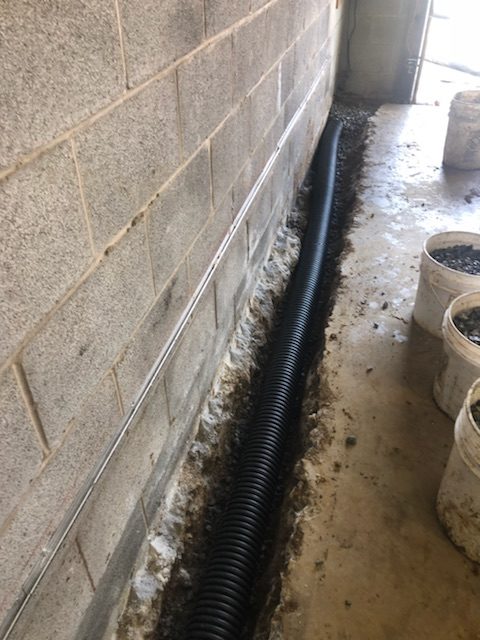
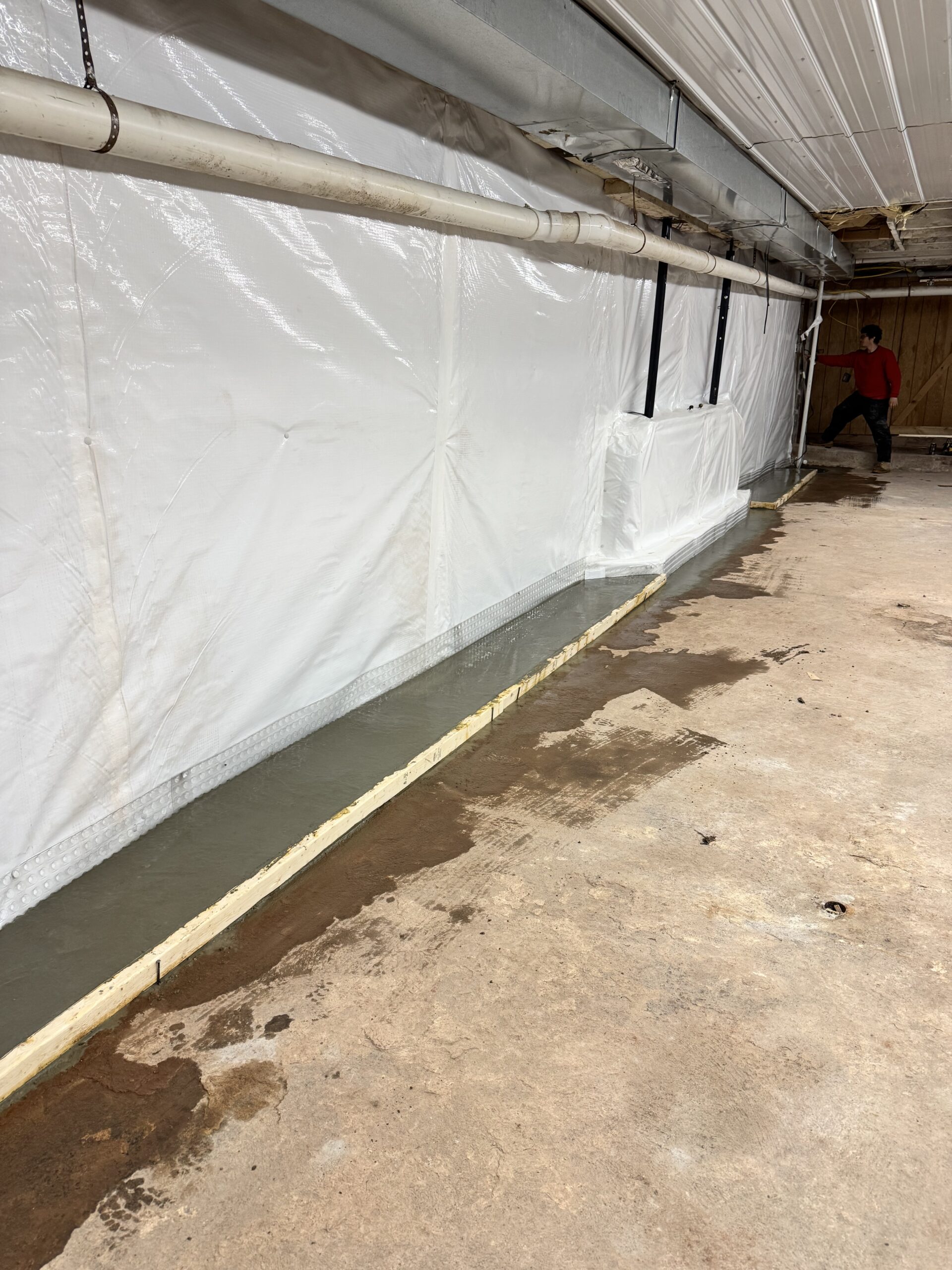
For stone foundations and homes taking on water along multiple walls — extremely common in Lancaster’s older housing — we install an interior perimeter drain that collects water around the entire footing and delivers it to the basin. Without that, a single pit often sits dry while water surfaces elsewhere in the floor.
Submersible Pumps, Pedestal Pumps, and Battery Backup
Submersible pumps are installed down inside the basin below floor level. The submerged motor runs quietly and cools efficiently under sustained load, which makes them the right choice for finished basements and for Lancaster homes that take on real volume during storms.
Pedestal pumps mount the motor on a shaft above the pit. They cost less and are simpler to service, but they run louder and can overheat during long cycles. A reasonable option for unfinished basements with light, predictable water intrusion.
Battery backup systems are worth serious consideration. The storms that overwhelm a basement are frequently the same storms that take down power, and a primary pump without electricity provides no protection at all. A backup unit engages automatically when power drops or the primary pump fails. For finished lower levels, homes with basement mechanicals, or anyone who travels, it is the difference between a wet floor and a full restoration project.
Sump Pump Repair and Replacement in Lancaster
Most residential sump pumps last seven to ten years. Signs that yours needs attention include continuous running, rapid short-cycling, grinding or rattling noise, heavy vibration during operation, a tripped breaker, or standing water left in the pit after a cycle ends. Sticking float switches, corroded impellers, and failed check valves that let water fall back into the basin are all common in aging systems. If your pump is at or past the ten-year mark, replacing it on your own schedule costs considerably less than replacing it after a flood.

Complete Basement Waterproofing for Lancaster Homeowners
A sump pump manages water that has already reached the basement. Keeping it from getting there requires addressing the rest of the system. Depending on what we find, DMR may recommend basement waterproofing solutions for interior drainage and wall treatment, exterior yard drainage to redirect surface water and roof runoff away from the foundation, or basement and crawlspace encapsulation to control the humidity and vapor that plague older, damp lower levels. For homeowners converting basement space into living area, we also install code-compliant egress windows.
DMR Waterproofing serves Lancaster and surrounding communities, including nearby Columbia and Lebanon, as well as Coatesville, Glenmoore, and the broader Chester County region. See our full sump pump installation services for more detail.
Frequently Asked Questions
How much does sump pump installation cost in Lancaster, PA? Cost depends on pump type, whether the concrete slab needs to be opened, how far the discharge line has to run, and whether interior perimeter drainage is included. Every estimate is free and provided upfront with no hidden fees.
My Lancaster rowhome has a stone foundation. Will a sump pump actually help? Yes, though it usually should not work alone. Stone foundations leak through mortar joints across a wide area, so we typically pair the pump with an interior perimeter drain that intercepts water along the full length of the wall rather than at a single point.
Where does the discharge water go on a narrow city lot? Rigid PVC line carries it a safe distance from the foundation and away from adjoining properties. We map the route during the estimate specifically so the water does not cycle back to your footing or create an issue next door.
Does Lancaster’s limestone geology change how a sump pump is installed? It changes how we evaluate the job. Groundwater in carbonate bedrock moves through fractures rather than draining evenly, so water entry can be concentrated and inconsistent. That makes an accurate on-site assessment more important here than in most markets.
How often should I test my sump pump? A few times a year, and always before the spring thaw. Pour water into the pit until the float rises, then confirm the pump engages, discharges fully, and shuts off cleanly.