Sump Pump Installations in Bethel Hill, PA
DMR Waterproofing: Sump Pump Installation Services in Bethel Hill, PA
DMR Waterproofing installs sump pump systems for homeowners in Bethel Hill, PA who are tired of watching water creep across the basement floor every time a storm rolls through. A sump pump is the single most effective piece of equipment for moving groundwater away from a foundation before it has a chance to soak into finished walls, stored belongings, or mechanical systems. Our team designs each installation around the actual conditions of the home rather than dropping in a one-size-fits-all unit. That means evaluating where water enters, where the basement floor sits lowest, how the soil around the foundation drains, and where the discharge line can safely terminate. Homes in this part of the Lebanon Valley sit on rolling ground near the Blue Mountain ridge, and the runoff that comes down those slopes during heavy rain or a fast spring thaw has to go somewhere. Without a pump and a properly routed discharge, it collects against the footing and works its way in through cold joints, wall cracks, and porous block.
We handle both new sump pump installations and sump pump replacement for older systems that have started short-cycling, running constantly, or failing outright. Every job is completed by trained waterproofing contractors using quality basins, check valves, and rigid PVC discharge piping — not the flexible corrugated line that collapses and clogs within a few seasons. If you are dealing with recurring water in a Bethel Hill basement, a sump pump is usually the foundation of the fix, and we will tell you honestly whether it is enough on its own or whether it needs to be paired with interior drainage or full basement waterproofing.

Why Bethel Hill Homes Need Dependable Sump Pump Protection
Several local conditions make sump pumps close to essential here. The area sits in the Swatara and Little Swatara watershed, and the seasonal groundwater table rises quickly after sustained rain. Properties on larger rural lots often have long grades that funnel surface water back toward the house. Older farmhouses and mid-century homes in the township frequently have stone or unreinforced block foundations that were never sealed on the exterior, so hydrostatic pressure pushes moisture straight through the wall. Newer construction is not immune either — backfilled soil around a recent foundation stays looser and more permeable than the surrounding ground for years, which effectively creates a bathtub around the house.
Add in Pennsylvania’s freeze-thaw cycle, which widens existing foundation cracks a little more every winter, and snowmelt that arrives all at once off higher ground, and you have a basement environment that needs an active water management system rather than passive hope. A properly sized pump paired with foundation crack repair and exterior grading corrections addresses the problem at the source instead of chasing symptoms.
Our Sump Pump Installation Process
We begin with a free on-site evaluation of the basement, the perimeter, and the exterior grade so we can identify the true low point and the best discharge route. From there, the installation follows a consistent process:
- Locating the pit. We mark the lowest point of the basement floor where water naturally collects and confirm there are no utilities in the way.
- Opening the floor. The concrete slab is cut and removed to create room for the sump basin.
- Excavating and setting the basin. We dig the pit deep and wide enough for the basin, bed it in clean gravel to support drainage and prevent silt intrusion, and set the rim flush with the finished floor.
- Restoring the slab. Gravel is packed around the basin and fresh concrete is poured and finished so the floor is smooth, level, and safe to walk on.
- Running the discharge. We core through the rim joist or foundation wall and run rigid PVC discharge line well away from the house, so the water you just removed does not immediately return to the footing.
- Installing the pump and controls. The pump, check valve, and float switch are installed, then tested under load to confirm proper cycling and full flow.
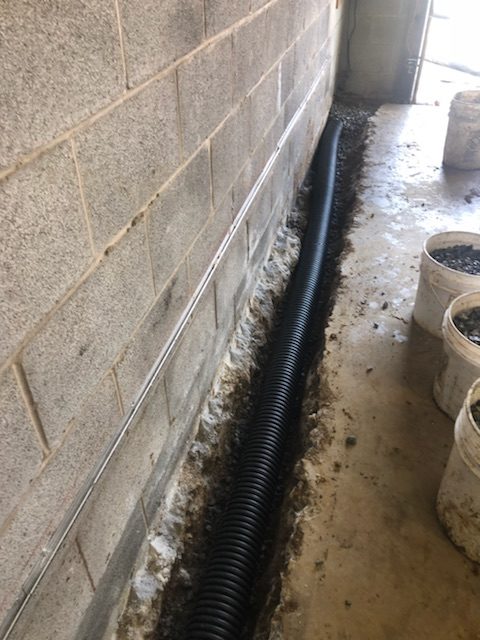
Where the water problem extends beyond a single low spot, we integrate the pump with an interior perimeter drain so water is collected around the entire footing and delivered to the basin instead of surfacing in the middle of the floor.
Submersible Pumps, Pedestal Pumps, and Battery Backup Systems
Submersible pumps sit down inside the basin, below the floor line. Because the motor is underwater, they run noticeably quieter and handle high-volume water intrusion well, which makes them the right call for finished basements or homes that take on significant water during storms.
Pedestal pumps keep the motor above the basin on a shaft. They cost less and are easier to service, but they are louder and can run hot during extended cycles. They work best in unfinished basements with lighter, more predictable water volume.
Battery backup systems deserve serious consideration in Bethel Hill. Rural service areas on the outer edge of the grid tend to lose power during the same severe thunderstorms and winter storms that cause the heaviest water intrusion — exactly when a primary pump matters most. A backup unit engages automatically when the power drops or the primary pump fails, giving you protection during the hours when a flooded basement is most likely and least convenient. We also recommend backup systems for homeowners who travel, have finished lower levels, or store anything of value below grade.
Sump Pump Repair and Replacement
Most residential sump pumps last somewhere between seven and ten years, and they rarely fail politely. Warning signs worth acting on include a pump that runs continuously, cycles on and off rapidly, makes grinding or rattling noise, vibrates hard during operation, trips a breaker, or leaves standing water in the pit after a cycle finishes. Visible rust, a float switch that sticks, or a check valve that lets water fall back into the basin are all reasons to schedule an evaluation. If your system is at or past the ten-year mark, replacing it on your schedule costs far less than replacing it after a flood.
Complete Basement Waterproofing for Bethel Hill Properties
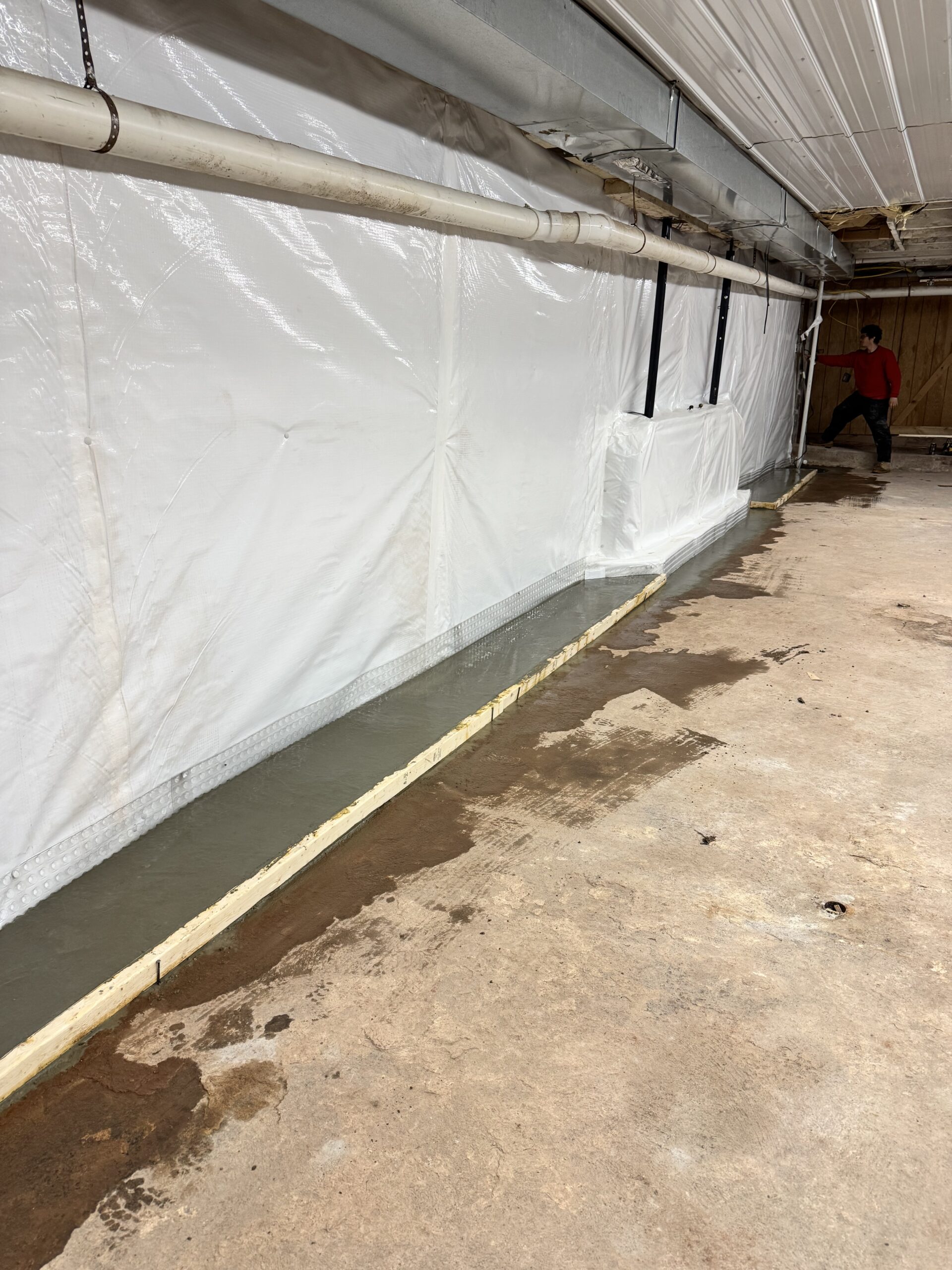
A sump pump is one component of a working water management plan. Depending on what we find, DMR may also recommend basement and crawlspace encapsulation to control humidity and vapor intrusion, exterior yard drainage to redirect surface water and downspout discharge away from the foundation, or basement wall crack repairs to seal active leak points in poured concrete and block walls. Our goal is a dry, usable lower level — not a single product sale.
DMR Waterproofing serves homeowners across south-central and southeastern Pennsylvania, including nearby Lebanon, PA, as well as Coatesville, Glenmoore, Chester Springs, and the broader Chester County region. Learn more about our full sump pump installation services.
Frequently Asked Questions
How much does sump pump installation cost in Bethel Hill, PA? Cost depends on whether the slab needs to be opened, how far the discharge line has to run, the pump type selected, and whether interior drainage is added. We provide free, upfront estimates with no hidden fees so you know the full number before any work begins.
How long does the installation take? A standard sump pump installation is typically completed in a single day. Jobs that include interior perimeter drainage or extensive concrete work may run longer, and we will give you a realistic timeline during the estimate.
Do I need a sump pump if my basement has only flooded once? Often, yes. A basement that has taken on water once has already demonstrated that groundwater can reach it. The conditions that caused it — grading, water table, foundation condition — do not correct themselves.
Should I install a battery backup? For most Bethel Hill homes, it is a worthwhile investment. Power outages and heavy storms tend to arrive together, and a primary pump without power is not protection.
Can I install a sump pump myself? It involves cutting and repouring concrete, excavating below the slab, coring an exterior wall, and correctly sizing and routing a discharge line. Mistakes at any of those steps typically show up as water damage later. Professional installation ensures the system is sized, placed, and drained correctly the first time.